Listening Comprehension Exercises (Bridges 2 - Burlington Books)
On top you have some listening comprehension exercises for my 2nd year Baccalaureate students. These are the scripts.

On top you have some listening comprehension exercises for my 2nd year Baccalaureate students. These are the scripts.
| week days in English | |
|---|---|
| Monday Tuesday Wednesday Thursday Friday Saturday Sunday |
lunes |
| months in English | |
|---|---|
| January February March April May June July August September October November December | Enero Febrero Marzo Abril Mayo Junio Julio Agosto Septiembre Octubre Noviembre Diciembre |
| seasons in English | |
|---|---|
| spring summer autumn winter | primavera verano otoño invierno |
Flashcards here.
For my 1st year ESO (Compulsory Secondary Education) students:
Let’s revise for our first test!!!!!!! Do the exercises above and then....
-  Listening Comprehension (click HERE). Fill in the gaps:
A) __________, I’m Alexandra!!
B) __________ Alexandra. __________ Woody. Woody Bates.
A) Do you live here in London, Woody?
B) No, I don’t.I work in London but I live in Brighton.
A) What’s your job?
B) ______________ an actor. What’s your job?
A)I work in _________ hotel.
Click HERE and HERE if you are interested in finding out how to write an e-mail in English.
HERE how to write formal letters.
HERE an informal (friendly)letter.
Letters (Samples) HERE.
Are these letters formal or informal?
Correct the mistakes in the two letters (one formal and one informal) above.
HERE tips for writing letters
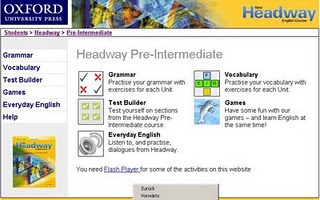
Whatever your level: BEGINNER, ELEMENTARY, PRE-INTERMEDIATE, INTERMEDIATE, UPPER-INTERMEDIATE or ADVANCED, you can practise and improve your English with Headway online. You have interactive exercises, puzzles, and games. There is also a Test Builder. You can build a test, then print it or do it on your computer.
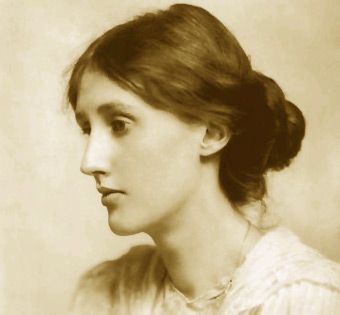
Who was Virginia Woolf? (click here as well)
The illustrated text above, by Luisa Antolín and Antonia Santolaya ( translation: Elena Riudavets) will allow my students to find out a little about her.
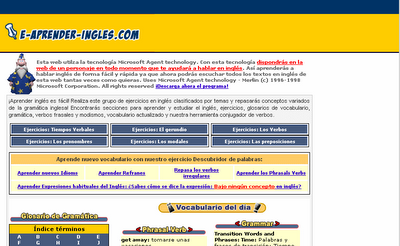
http://e-aprender-ingles.com is an interesting webpage with useful exercises on-line for English learners.
A few interesting pages for young learners:
a) recursostic
b) angles365
c) info-3.com
e) happy tenses
Here you have the English "Selectividad" Exams from 2001 to 2009.
On top you have the 2004 June exam (option 2) and the answers to questions 1 to 4. Here you have a possible answer for question 5.Alternative question2:
Find in the text the words that match the following definitions:
- The condition of being protected from danger or not exposed to risk:
- Energy emitted as electromagnetic waves or subatomic particles:
- The state or fact of being likely (capable of existing):
- Exposed to the risk of being attacked or harmed:
These are the 2010 and 2011 exams.
These are the June 2012 exams. (June 2012 Option A Writing - Click HERE // June 2012 Option B Writing - Click HERE) Writing - The purpose of education HERE
Isabel Pérez has got a webpage with lots of selectividad exams and other interesting links.
Another "Selectividad" Exam (THE MOAI) (Solved) HERE.
PAU ASSESSMENT CRITERIA HERE - CLICK HERE AS WELL (2013-2014 STRUCTURE / ASESSMENT CRITERIA)
MISTAKES CIUG
The chart above includes the basic English tenses, their translation into Spanish, some examples and translation problems. Here you have sentences in Spanish for you to translate into English.
Here some power-point presentations.
HERE exercises (Robots from a Distant Planet) and HERE Tense Revision by Alejandro Valero (EL TINGLADO - BLOG) Click Listening.
ESLGAMES Interactive game, HERE. Another game HERE.
HERE: Going to and the present continuous for future arrangaments.
The third question in the Galician "selectividad" exam says:
"Complete the second sentence of each pair so that it has the same meaning as the first one." In other words, our 2nd "Bachillerato" students have to practise rewriting sentences keeping the original meaning. We call these exercises "transformations". On top my students have some sentences which they must rewrite.
KEY HERE.
On top you have translation and fill-in-the-gap exercises on linking words (click HERE, too), as well as a few "transformations".
You also have two compositions in which several linking words are used.
Here a composition entitled A journey.
Here an essay entitled My ideal place to live.
HERE Linking words in El tinglado blog. HERE Conjunctions in http://learnenglish.britishcouncil.org
HERE Linking words in Bon’s Tips
Click HERE TWO ESSAYS (Correct the mistakes - Insert linking words)
Click HERE (Oprah Winfery’s biography - Connectors)
Galician Schools of Languages: These are their websites:
Here Ourense.
Here A Coruña.
Here Pontevedra.
Here Lugo.
Here Santiago.
Here Vigo.
Here Ferrol.
Here Monforte de Lemos.
Here Vilagarcía de Arousa.
Here Viveiro.
Grammar, vocabulary, exercises, useful links, videos (their youtube channel here), translator, karaoke, "crib-notes".....
The Yellow Pencil: Everything for English learners!!!!!
The Arrival (by Shaun Tan) is a migrant story told as a series of wordless images that might seem to come from a long forgotten time. A man leaves his wife and child in an impoverished town, seeking better prospects in an unknown country on the other side of a vast ocean. He eventually finds himself in a bewildering city of foreign customs, peculiar animals, curious floating objects and strange languages. With nothing more than a suitcase and a handful of currency, the immigrant must find a place to live, food to eat and some kind of gainful employment. He is helped along the way by sympathetic strangers, each carrying their own unspoken history: stories of struggle and survival in a world of incomprehensible violence, upheaval and hope.
Daniel García Cancio’s students (Daniel is a Greek language teacher at IES Xesús Taboada Chivite) wrote texts in Spanish describing every single page in this amazing picture book and recorded them. Once they had completed their task, I translated their texts into English and then I recorded my translation.
On top you have the result of our work: The Arrival (Migrants)-chapters I and II.
My students will have the chance to watch and listen to the six chapters this story is divided into ( here chapter three, this is chapter four, this is chapter five and here chapter six). Here you have the text in Spanish and the translation into English (blog created by Music teacher David Rguez. Rivada - several teachers and their pupils are working on it) and this is a fill-in-the-gaps exercise.
Listen to this Canadian girl and then fill in the blanks in this text (first 3:12 minutes).
What do you think about her speech? (It was made in 1992). What has changed since then?
Read this essay.
Watch this video.
This is a map of the wheel-ruts of modern English. Etymologies are not definitions; they're explanations of what our words meant and how they sounded 600 or 2,000 years ago.
Click HERE.
Answer the questions above using should, relative pronouns, second conditional sentences and reported speech.

"Also" is used in positive sentences to add an agreeing thought.
Examples:
"Too" is used in positive sentences to add an agreeing thought. It has the same meaning as "also," but its placement within the sentence is different.
Examples:
"Too" usually comes at the end of a clause.
Examples:
Although "too" is usually placed at the end of a clause, it can sometimes be used with commas after the subject of the sentence. This is usually only done in formal speech.
Examples:
"Either" is used in negative sentences to add an agreeing thought.
Examples:
"Either" usually comes at the end of a clause.
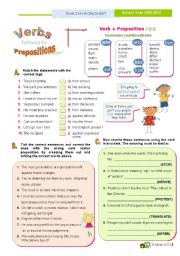
Some verbs are followed by certain prepositions which you must learn. For example:
Exercise HERE.