THE YELLOW PENCIL
Grammar, vocabulary, exercises, useful links, videos (their youtube channel here), translator, karaoke, "crib-notes".....
The Yellow Pencil: Everything for English learners!!!!!

Grammar, vocabulary, exercises, useful links, videos (their youtube channel here), translator, karaoke, "crib-notes".....
The Yellow Pencil: Everything for English learners!!!!!
The Arrival (by Shaun Tan) is a migrant story told as a series of wordless images that might seem to come from a long forgotten time. A man leaves his wife and child in an impoverished town, seeking better prospects in an unknown country on the other side of a vast ocean. He eventually finds himself in a bewildering city of foreign customs, peculiar animals, curious floating objects and strange languages. With nothing more than a suitcase and a handful of currency, the immigrant must find a place to live, food to eat and some kind of gainful employment. He is helped along the way by sympathetic strangers, each carrying their own unspoken history: stories of struggle and survival in a world of incomprehensible violence, upheaval and hope.
Daniel García Cancio’s students (Daniel is a Greek language teacher at IES Xesús Taboada Chivite) wrote texts in Spanish describing every single page in this amazing picture book and recorded them. Once they had completed their task, I translated their texts into English and then I recorded my translation.
On top you have the result of our work: The Arrival (Migrants)-chapters I and II.
My students will have the chance to watch and listen to the six chapters this story is divided into ( here chapter three, this is chapter four, this is chapter five and here chapter six). Here you have the text in Spanish and the translation into English (blog created by Music teacher David Rguez. Rivada - several teachers and their pupils are working on it) and this is a fill-in-the-gaps exercise.
Fai click aquí para ir ó artigo " O club de lectura pensando no vindeiro curso: ESTEVO CREUS "Poemas da cidade oculta".
Fai click aquí para " Grazas polos vosos escritos".
Fai click aquí para " Xuntanza con ex-alumnos e ex-profes".
Fai click aquí para " Memoria de club de lectura A árbore vermella".
Fai click aquí para "Grazas, grazas, Miguel".
Listen to this Canadian girl and then fill in the blanks in this text (first 3:12 minutes).
What do you think about her speech? (It was made in 1992). What has changed since then?
Read this essay.
Watch this video.
This is a map of the wheel-ruts of modern English. Etymologies are not definitions; they're explanations of what our words meant and how they sounded 600 or 2,000 years ago.
Click HERE.
Fai click aquí para ir ó artigo " A Paz".
Aquí para " Concurso Adiviña quen é 3ª edición - Noam Chomsky".
Aquí para " Charla sobre o I-Ching".
Aquí para " Grazas, Hilda".
Aquí para " Grazas, Xosé Manuel".
Aquí para " Concurso Adiviña quen é - Última edición deste curso".
Aquí para " Entrega dos agasallos de Celso Fdez Sanmartín no río-círculo".
Aquí para " O club de lectura asiste a unha charla de Xosé Carlos Caneiro na Biblioteca Municipal de Verín".
Aquí para " Na xuntanza Axenda 21 en Pontevedra".
Aquí para " Derradeiro día no club de lectura cos alumnos de ESO".
Aquí para " Ata o vindeiro curso!!!!!!".
Answer the questions above using should, relative pronouns, second conditional sentences and reported speech.
"Also" is used in positive sentences to add an agreeing thought.
Examples:
"Too" is used in positive sentences to add an agreeing thought. It has the same meaning as "also," but its placement within the sentence is different.
Examples:
"Too" usually comes at the end of a clause.
Examples:
Although "too" is usually placed at the end of a clause, it can sometimes be used with commas after the subject of the sentence. This is usually only done in formal speech.
Examples:
"Either" is used in negative sentences to add an agreeing thought.
Examples:
"Either" usually comes at the end of a clause.
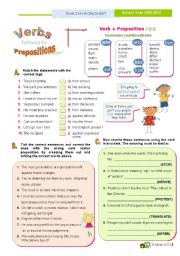
Some verbs are followed by certain prepositions which you must learn. For example:
Exercise HERE.
Here you have some EE.OO.II sample tests:
Castilla La Mancha EE.OO.II Tests
(Galician sample tests in this article)
Some adjectives need a preposition before their object.
Here are some of the most common ones:
Click here to do an exercise.
MORE ADJECTIVES +PREPOSITIONS and another exercise. Here another two ones.
| Tense | Subject | Verb | Object | |
|---|---|---|---|---|
| Simple Present | Active: | Rita | writes | a letter. |
| Passive: | A letter | is written | by Rita. | |
| Simple Past | Active: | Rita | wrote | a letter. |
| Passive: | A letter | was written | by Rita. | |
When rewriting active sentences in passive voice, note the following:
Passive Voice Exercises :
Present Simple.(Click HERE as well)
Past Simple.( Click HERE as well)
funnylessons.com is a website that allows you to learn English through jokes.
An easy, fun English course. You can learn the language through jokes and the challenge is twofold. You have to understand English and also the punch line.
Each lesson has vocabulary, pronunciation, etc.. In addition, other materials are available in "more resources".
My 4th year ESO students are reading and abridged version of Romeo and Juliet (click here, too), by William Shakespeare.
Here you have flashcards with questions about Romeo and Juliet. (Here some more questions and answers).
Here they have the time line of Shakespeare’s life.Here, his plays.
Here, Shakespeare’s quotations and scripts and here, Shakespeare challenges.
Here you can discover Shakespeare’s world (Here you have information about Queen Elizabeth I ).
Here Romeo and Juliet test.
Here ten curious facts about Shakespeare.
Listen to your teacher and answer these questions.
HERE a few questions about Shakespeare.
ENJOY SHAKESPEARE!!!!!!!!!
Here are some ways in which we can give give advice or make recommendations.
Click here to listen to and watch an explanation on the use of should, ought to and had better provided by teacher Alex.
Here you have some exercises.
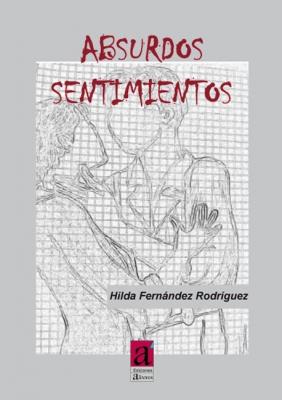
Aquí podes ler o artigo " O club de lectura e o grupo de teatro na MITEU".
Aquí " Absurdos sentimientos, de Hilda Fernández".
Aquí "25 de Abril - O Tesouro".
Aquí "Ana Mª Matute".
My 4th year C ESO students have Music as one of their optional subjects. In their Music classes they play instruments, sing, dance and of course learn about the history of music.
One of the songs they have to sing during the third term is "Do you hear the people sing?", from the amazing musical play "Les Misérables". Their music teacher intends to ask them to sing the song in English, so he has asked me to help them with the pronunciation and to translate the song into Spanish. I love "Les Misérables", in fact I have recently seen the musical in Madrid( click here, here and here) and I was astonished....The superb voices, the production..... Incredible!!!!!!!!!! In fact, the novel on which it is based, "Les Misérables", by Victor Hugo, is a masterpiece.
Here you have the lyrics.
Other famous songs from "Les Misérables":
If we report what another person has said, we usually do not use the speaker’s exact words (direct speech), but reported (indirect) speech. Therefore, you need to learn how to transform direct speech into reported speech. The structure is a little different depending on whether you want to transform a statement, question or request.
Exercise (statements) - Exercise (questions) - Exercise (requests) - Exercise (mixed)
Listen to statements in direct and reported speech -> Click HERE.
Listen to questions in direct and reported speech -> Click HERE.
Fai click aquí para ir ó artigo "Visita de Celso Fernández Sanmartín".
Fai click aquí para ir ó artigo "Conto de Rodari para ler no club de lectura".
Fai click aquí para ir ó artigo "A nosa Biblioteca gaña o premio Irmandade do Libro".
Fai click aquí para ir ó artigo " A árbore vermella no curso sobre cooperativismo organizado polo CFR de Verín".
Fai click aquí para ir ó artigo " Conto de Rodari para ler no club de lectura".
Fai click aquí para ir ó artigo " Coa nosa árbore vermella".
Fai click aquí para ir ó artigo "Verde".
Fai click aquí para ir ó artigo " O club de lectura na MITEU".
Fai click aquí para ir ó artigo " David, escritor".
Fai click aquí para ir ó artigo "Emigrantes, blog creado por David Rguez Rivada".
Fai click aquí para ir ó artigo "Álbumes gráficos con música".
Fai click aquí para ir ó artigo "23 de Abril, Día Mundial do Libro".
The second conditional (also called conditional type 2) is a structure used for talking about unreal situations in the present or in the future.
Like a first conditional, a second conditional sentence consists of two clauses, an "if" clause and a main clause:
| if clause | main clause |
| If I had a million dollars, | I would buy a big house. |
If the "if" clause comes first, a comma is usually used. If the "if" clause comes second, there is no need for a comma:
| main clause | if clause |
| I would buy a big house | if I had a million dollars. |
We use different verb forms in each part of a second conditional:
| if clause | if + subject + simple past verb* |
| main clause | subject + would + verb |
*Note that this "simple past" form is slightly different from usual in the case of the verb BE. Whatever the subject, the verb form is "were", not "was": If I were rich, I’d buy a big house.
If you had a million dollars, what would you do? http://www.genkienglish.net/milliondollars.htm
If I had a million dollars (Fill in the gaps) http://www.helping-you-learn-english.com/second-conditional.html
ANOTHER SECOND CONDITIONAL SONG: iF i WERE A BOY - BY BEYONCE